Start with the manuals and a visual check
Keep the door and opener model information available. From the ground, look for visible wear, damage or a change in alignment. A frayed cable, separated spring, displaced roller or crooked panel belongs on a repair request, not a do-it-yourself adjustment list.
Write down when you first noticed the change and whether it followed an impact or service visit. A short record is easier to discuss than trying to remember several intermittent symptoms during a phone call.
Keep the opening and controls clear
Check that stored items do not obstruct the door's path or block accessible safety sensors. Keep controls out of children's reach and avoid using the garage opening as a play area. Safety devices and reversal tests should be checked according to the manufacturer's instructions for the actual system.
If a required safety check fails, stop using the opener and request service. Do not bypass sensors, raise force settings or repeatedly run the door to get around a fault. Ask a technician for help if you cannot carry out a manual's procedure safely.
Treat lubrication as model-specific maintenance
Door and opener manufacturers specify which components need lubrication and which products are appropriate. Applying lubricant everywhere is not a substitute for identifying worn or damaged hardware. Ask before spraying tracks, sensors, drive components or anything near electrical parts.
A service conversation should clarify what the maintenance visit includes. Inspection, appropriate lubrication and operational checks are different from replacing a broken spring, repairing a cable or resolving an opener fault. Those findings may require a separate estimate.
Use a simple record between service visits
You do not need to perform a mechanical test to prepare useful notes. Keep a dated record of changes you notice during normal use, provided the door is operating safely.
- New sounds and when in the movement they occur.
- A change in smoothness, alignment or response to controls.
- Visible damage observed without touching moving parts.
- Dates of inspections or repairs and the parts listed on the invoice.
- Any manufacturer-recommended check you could not complete safely.
Plan a tune-up without assuming it covers every repair
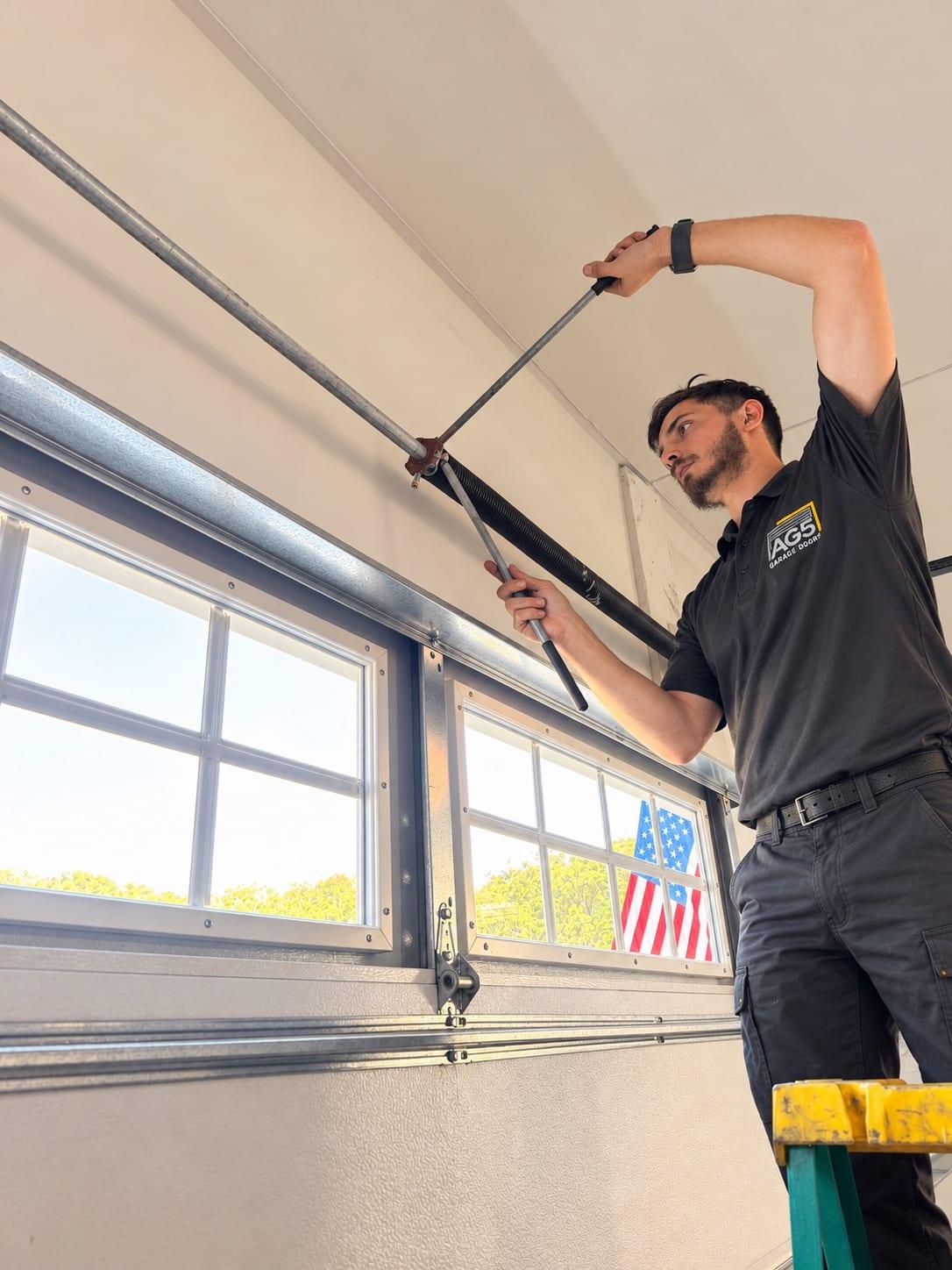
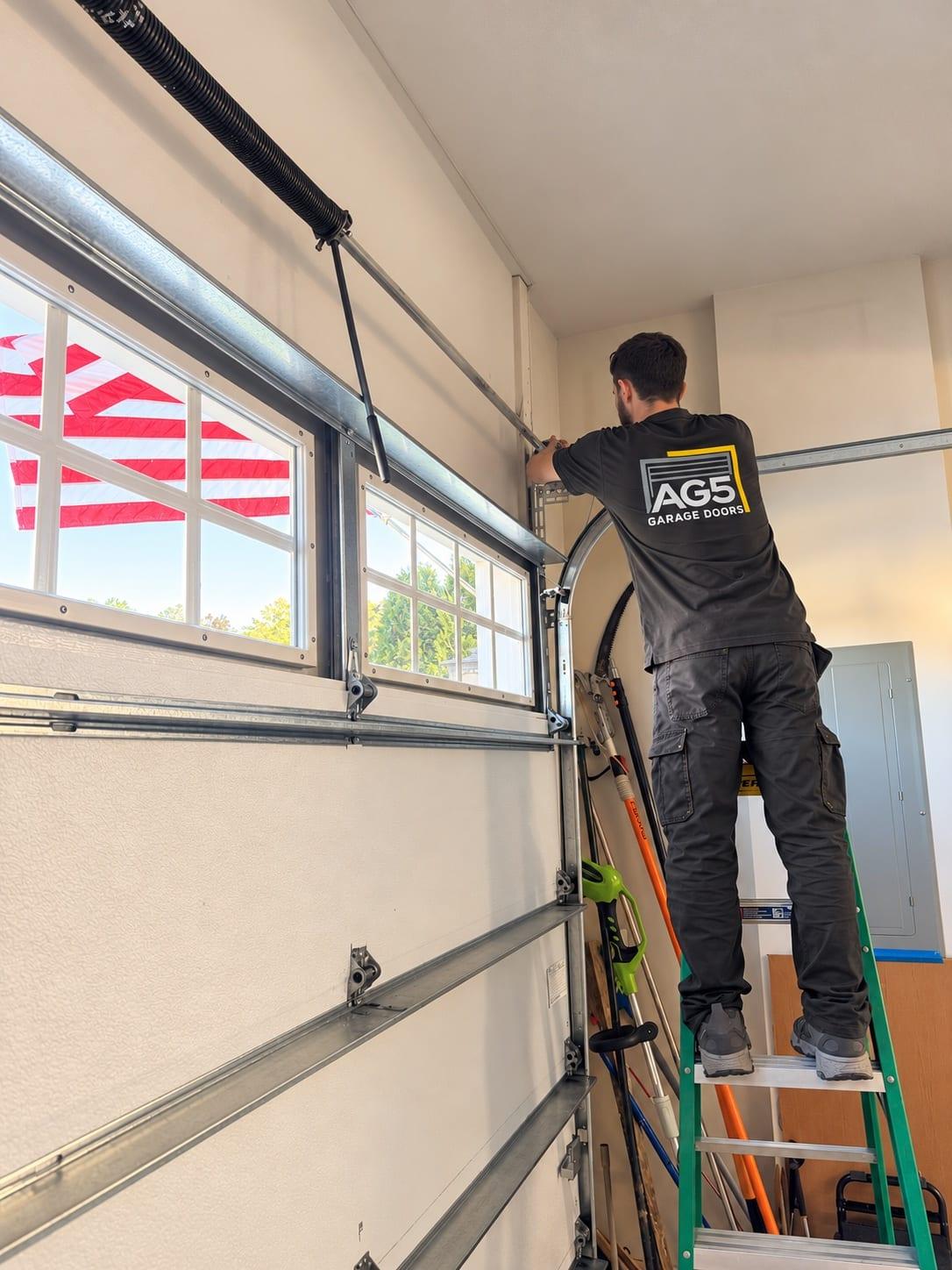
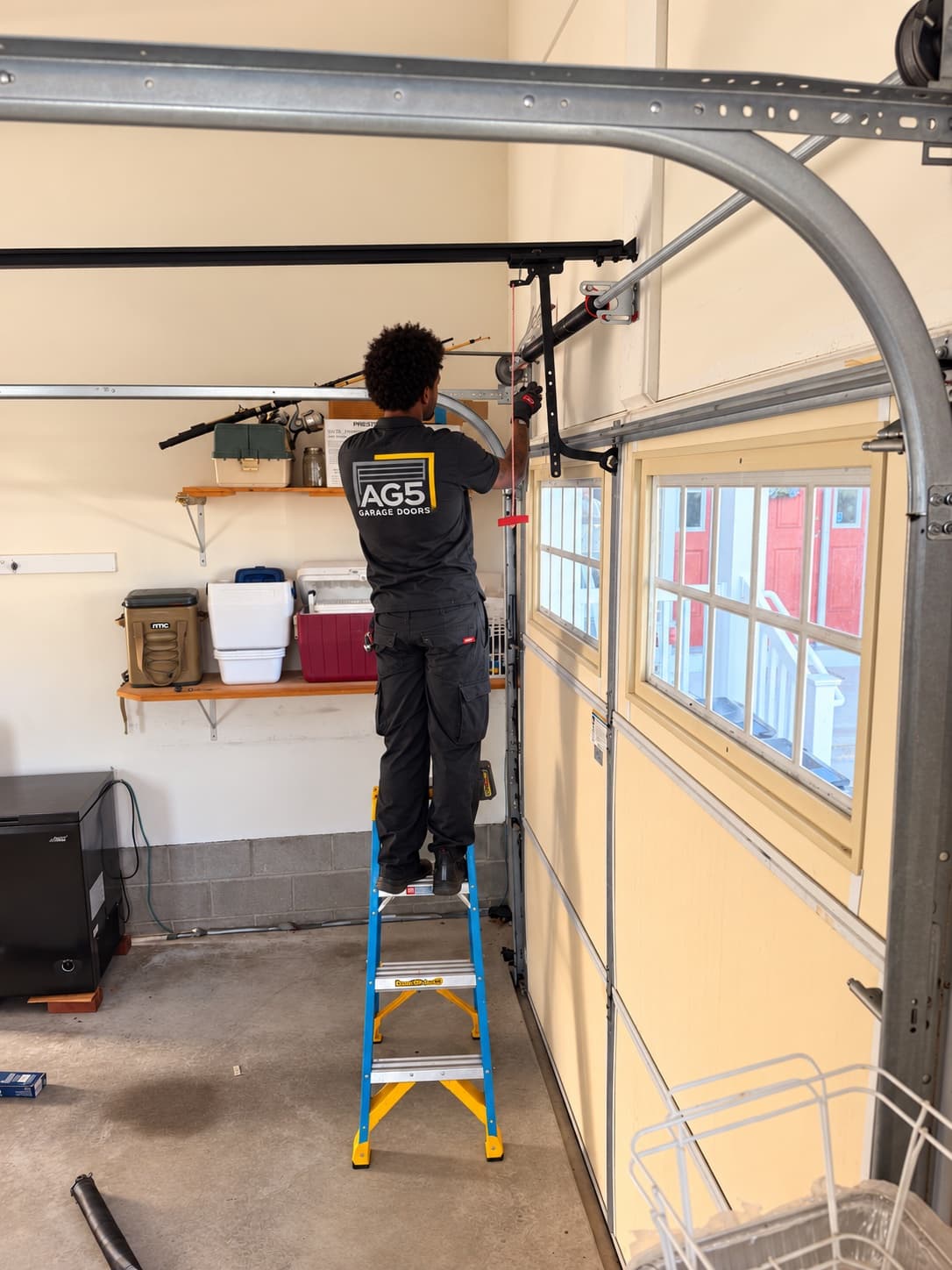
DASMA recommends regular homeowner safety checks and a yearly visit from a trained door systems technician. The exact maintenance needs still depend on the equipment and its instructions. If the door is already damaged or behaving abnormally, request repair attention rather than waiting for routine maintenance.
AG5 provides residential maintenance and tune-up service requests across its existing Los Angeles coverage. Share your ZIP code and any current symptoms. Ask what the visit includes, what would require separate approval and how availability will be confirmed.
Questions homeowners ask
Does maintenance mean my door will never need repair?
No. Maintenance can help identify wear and operating issues, but it cannot guarantee that a component will never fail.
Should I adjust a spring if the door seems unbalanced?
Spring adjustments require trained service. Stop using a door that behaves abnormally and describe the symptom when requesting an inspection.
Further reading
Consult the manual for your exact door and opener. These resources do not replace an inspection.